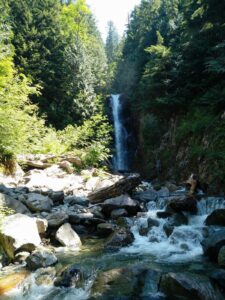
Picture this: you’re deep in a misty, moss-draped forest, the sound of rushing water growing louder with every step, and then you round the corner and see it. A 30-metre curtain of water crashing down onto the rocks below, surrounded by ancient cedar trees. Welcome to Norvan Falls. Such a beauty!
The Norvan Falls hike in North Vancouver is one of BC’s best-kept secrets , and it’s an accessible, rewarding trail through Lynn Headwaters Regional Park that rewards you with one of the most spectacular waterfalls in the Lower Mainland. And the best part? You don’t need to be an experienced hiker to get there.
Whether you’re lacing up your hiking boots for the first time or you’re a weekend trail regular looking for a new favourite, this guide has everything you need to know about the Norvan Falls trail : distance, difficulty, parking, what to bring, and insider tips for getting the most out of your day.
Norvan Falls Trail: At a Glance
- 📍 Location: Lynn Headwaters Regional Park, North Vancouver, BC
- 📏 Distance: 14 km return (out-and-back)
- ⏱️ Time: 5 to 5 hours depending on pace
- 📈 Elevation Gain: 195 m (very manageable for beginners!)
- 🟡 Difficulty: Easy-Moderate (long but mostly flat)
- 🐾 Dog Friendly: Yes! Dogs allowed on leash
- 📅 Season: Year-round (see tips for winter visits)
- 🚗 Drive from Vancouver: ~35 minutes
- 💰 Parking: Free in winter; $3.25/hr (max $18.50/day) April 1 – Sept 30
Why Norvan Falls Should Be on Every Beginner’s Bucket List
There are dozens of waterfall hikes near Vancouver, so what makes Norvan Falls special? A few things:
- It’s genuinely beginner-friendly. The trail is long, yes…but the elevation gain is minimal. Most of the route runs parallel to Lynn Creek on a well-marked, well-maintained path. If the distance worries you, take your time and break it into sections.
- The payoff is massive. That 30-metre waterfall at the end? It’s the real deal. Standing at the base with mist on your face is one of those BC moments that makes you feel wildly alive. Who doesn’t love waterfalls?
- You can hike it any time of year. Unlike many BC trails buried under snow from October to June, Norvan Falls is accessible year-round. It’s especially magical in winter, with icy edges and misty air.
- The forest is stunning the whole way. You’re not hiking to the falls and enduring the trail. The journey through old cedar groves, past rushing Lynn Creek, and through lush green moss draped forest is beautiful from start to finish.
How to Get to Norvan Falls
Driving
From Vancouver, take Highway 1 westbound and exit at Lynn Valley Road (Exit 19 North). Follow Lynn Valley Road all the way to the end and it’ll take you directly into the Lynn Headwaters Regional Park parking area, just past the End of the Line General Store.
Important: Park in the Lynn Headwaters Entrance Parking Lot, not the Rice Lake Parking Lot, which adds an extra 4 km to your hike (trust us, your feet will thank you at the end of 14 km).
Park hours: The gates are closed at sunset, with seasonal hours. In winter, that’s as early as 5 pm. Check the Metro Vancouver Parks website before you go so you don’t get locked in! Eeee.
By Transit
No car? No problem. From downtown Vancouver, take Bus 210 from EB W Pender St at Seymour St. Get off at EB McNair Dr at Ramsay Rd and it’s about a 10-minute walk from there to the park entrance. The bus ride takes roughly 40 minutes. Not too bad at all.
The Norvan Falls Trail: Step-by-Step Guide
The trail to Norvan Falls is broken into three natural sections, which is a great way to think about it as a beginner.
Section 1: Lower Lynn Loop (0 – 1.7 km)
From the parking lot, follow the paved road to the BC Mills House, his is where you’ll find the trailhead, a map board, and the park’s only outhouse. Use the facilities here, because there are no more bathrooms on the trail.
Cross the wooden bridge over Lynn Creek (gorgeous photo opportunity, just saying) and turn left. Sign in at the hiker registration board, this is a good safety measure.
The first 1.7 km is along a wide, flat gravel road hugging Lynn Creek. It’s easy, well-marked, and surrounded by second-growth cedar. Keep an eye out for the logging artifacts from the early 1900s, an old four-wheel log transporter and rusty saw blades are scattered along the trail as silent reminders of the valley’s history.
Section 2: Cedars Mill Trail (1.7 – 5.6 km)
At the junction, stay left and continue north onto the Cedars Mill Trail. The path narrows here and becomes a more traditional forest trail. Think roots, occasional mud puddles, and a few small stream crossings.
Keep following the creek. The forest gets denser and greener as you push further in, with moss blanketing everything in every shade of green imaginable. Around the 4 km mark, you’ll emerge into a clearing called the Third Debris Chute, a wide, open area of loose rocks with sweeping views of Goat Ridge and Mount Fromme.
This is a perfect rest stop. Eat a snack, catch your breath, and take it all in before the final push.
Section 3: Headwaters Trail to the Falls (5.6 – 7 km)
From the debris chute, the trail transitions onto the Headwaters Trail. This section is slightly more rugged, with some muddy patches in wet seasons and tree roots to navigate. The forest feels more remote here, plus the crowds thin out and it gets quieter.
You’ll start hearing the falls before you see them. Follow the sound. A final short climb leads you up to the viewpoint and then there it is: Norvan Falls, a spectacular 30-metre cascade thundering down the cliff face.
On warm days, the mist drifts down and creates natural air conditioning. On winter visits, ice forms around the edges, making the whole scene look like something out of Narnia. Take your time here , you’ve earned it. And you’ll just bwant to.
Insider Tips for Hiking Norvan Falls as a Beginner
- Arrive early. Especially on weekends and sunny days, the two main parking lots fill up before 9 am. Arriving by 8 am in summer gives you a peaceful trailhead experience.
- Wear waterproof boots. BC is rainy. Even in summer, the trail can be muddy. Waterproof hiking boots are strongly recommended over trail runners or sneakers.
- Bring micro spikes in winter. The trail runs close to the river and icy sections can appear even on a clear day. Micro spikes are a game-changer from November through March.
- Sign in at the trailhead. Fill out the hiker registration form at the start of the trail. It’s there for your safety and it takes 30 seconds.
- Check gate closing times. The park closes at sunset. Gate closing times change seasonally, check Metro Vancouver Parks before your trip.
- Take the easier route in. At the first junction, don’t head uphill on the Upper Lynn Loop: stay left on the Lower Lynn Loop. The upper route adds significant elevation for no extra views.
- Spring = best waterfall. If you want to see Norvan Falls at full force, visit in spring (March to May) when snowmelt pushes the volume to its peak. Impressive doesn’t cover it.
What to Pack for the Norvan Falls Hike
It’s a long trail , 14 km return, so even though it’s not technically difficult, you’ll want to be prepared:
- Waterproof hiking boots
- At least 2 litres of water per person
- High-energy snacks (trail mix, energy bars, a good sandwich)
- Waterproof jacket (BC weather is unpredictable)
- Layers , especially for morning starts in the shoulder season
- Bug spray (spring and summer)
- Micro spikes (November – March)
- A fully charged phone with AllTrails downloaded (the trail is well-marked, but peace of mind is nice)
- A camera : you will want photos. And lots of ’em.
Before or After Your Hike: What’s Nearby
Lynn Headwaters Regional Park is tucked into North Vancouver, which means you’re surrounded by great food and coffee options for your post-hike reward:
- End of the Line General Store: Right at the park entrance. Good coffee and snacks before you set off.
- Lynn Valley Village: A short drive down Lynn Valley Road with cafes, restaurants, and a well-stocked outdoor gear shop if you need to grab anything last minute.
- Lynn Canyon Park: Just 10 minutes away, with a free suspension bridge and swimming holes. Perfect if you want to extend your adventure into the afternoon.
Norvan Falls FAQ
Is the Norvan Falls hike good for beginners?
Yes! While it’s 14 km return, the elevation gain is minimal (195 m) and the trail is well-marked and well-maintained. Take your time and it’s very manageable for first-time hikers. Wear proper footwear and bring enough food and water.
Can you hike Norvan Falls in winter?
Absolutely, and it’s gorgeous. The trail is open year-round, though backcountry routes beyond the falls are closed in winter. Bring micro spikes, dress in layers, and check gate times before you go.
Is there parking at Norvan Falls?
Yes. There are two parking lots at Lynn Headwaters Regional Park. Parking is free from October through March, and costs $3.25/hr (max $18.50/day) from April through September. Arrive early on weekends, lots fill up fast. Typical for pretty Vancouver spots such as this.
Are dogs allowed on the Norvan Falls trail?
Yes! Dogs are welcome on the trail but must be kept on leash. The trail follows the river closely, so bring an extra water dish for your pup, they’ll love it.
Do I need a permit to hike Norvan Falls?
No hiking permit is required. You just need to pay for parking (in season) and register at the trailhead.
Final Thoughts: Is Norvan Falls Worth It?
Without question, yes. The Norvan Falls hike is one of those trails that feels genuinely rewarding at every stage. The forest is beautiful from the first step, the trail is peaceful and well-maintained, and the waterfall at the end is the kind of view that makes you want to stand there for an hour. Seriously, waterfalls are just so dang pretty.
For beginner hikers especially, it’s a perfect introduction to what hiking in British Columbia can look like: lush, dramatic, accessible, and free (mostly). Put it on your list, pack your boots, and get out there.
Have you hiked Norvan Falls? Drop your experience in the comments below! And if you’re looking for more info: check out our post on what to bring hiking for beginners.